Send USDT on the wrong network and you either overpay or burn it — which chain should you use in 2026?TRC20, BEP20, ERC20 and Solana fees compared, plus exchange withdrawal costs and how to pick by what the recipient can receive
Many people assume sending USDT is basically free. That's only half true. The on-chain fee really is tiny, but the full cost has two pieces people miss: exchanges charge a flat withdrawal fee per network, and there's a spread when the money gets cashed out on the other end. The bigger risk is that USDT isn't one single thing with one address: the same token runs on several unrelated blockchain networks, and picking the wrong one doesn't just cost more, it can burn the money for good, with no support desk able to bring it back. Written for people in Singapore, Malaysia, Taiwan and Hong Kong who send USDT to family or move it around themselves.
One table: which network costs least in 2026
The short version: for sending money to family or moving USDT between exchanges, the safest default is usually TRC20 (Tron): supported almost everywhere, cheap, and the hardest to get wrong. Only when you and the recipient happen to use the same exchange and both support BEP20 (BNB Chain) is it worth choosing the cheaper BEP20. ERC20 (Ethereum) is the most expensive of the bunch, so don't use it for small amounts. The table below lines up the common USDT networks. Every number is illustrative; go by what your exchange's page shows at the time you act.
| Network | On-chain fee (illustrative) | Binance withdrawal fee (illustrative) | Speed | Best for |
|---|---|---|---|---|
| TRC20 (Tron) | ~$1–4 (depends on energy/bandwidth) | ~$1 | A few minutes | Supported almost everywhere — the default for cross-exchange transfers and sending to family |
| BEP20 (BNB Chain) | ~$0.05–0.30 | ~$0.29 | A few minutes | Lowest, most stable fees when both sides support it or use Binance |
| Solana (SPL) | Under $0.01 (a few cents when busy) | ~$0.1–1 | Very fast | Extremely cheap when the recipient's wallet or exchange supports it |
| Polygon | ~$0.01 | ~$1 | Fast | Cheap, worth using when supported |
| ERC20 (Ethereum) | ~$1–10 (higher when congested) | ~$5 | Slower | The most expensive — avoid unless the recipient only accepts ERC20 |
Looking at this table, it's tempting to conclude "cheapest network wins." It doesn't hold up: cheapest doesn't mean the one you should use. What actually decides the right network is what the recipient can actually receive.
Why the cheapest network isn't always the right one
Solana and BEP20 fees are so low they're almost rounding errors, but that doesn't mean you should default to them. What decides which network you should use was never "which one's cheapest"; it's what the recipient can actually receive. USDT on different networks are separate assets that happen to share a name and a $1 peg. TRC20 USDT and ERC20 USDT live on different ledgers that don't talk to each other. Send Solana USDT to an address that only accepts TRC20 deposits, and the other side almost certainly won't see it arrive, so "cheap" doesn't even enter into it.
So the first step is always the same: before you send anything, ask the recipient which USDT network their exchange or wallet actually supports for deposits. If they mainly cash out through an exchange's P2P section, find that out first: whatever network you send has to be one they can receive, and cost comes second. Most people abroad sending money to family find that the recipient has an account set up for P2P cash-outs, and those accounts almost universally accept TRC20 deposits. That's why TRC20 has become the default choice across exchanges and wallets, not because it's always cheapest but because it's the hardest to get wrong. If you and the recipient happen to use the same exchange and it supports BEP20 or Solana, go ahead and pick the cheaper one. For what happens after the USDT lands, see how to cash out USDT safely.
What does a USDT transfer actually cost?
Working out what a USDT transfer actually costs isn't a matter of looking up "the gas fee"; that's a small part of the story. Break it down fully, and the cost has three pieces:
- Exchange withdrawal fee. When you move USDT off your exchange account onto the chain, the exchange charges a flat fee set by the network you choose. This is the "Binance withdrawal fee" column in the table above, and it's the one piece of the cost you can know in advance and actually reduce by picking a different network.
- On-chain network fee. In most cases this is already folded into the withdrawal fee the exchange charges (the exchange covers it and recoups it through that fee), so you don't do anything extra. The key feature: it's mostly unrelated to the amount: sending $100 and sending $10,000 on the same network costs roughly the same in network fees.
- The P2P spread on the cash-out end. The gap that appears when the recipient sells USDT for local currency is usually the single biggest cost in the whole chain, and it depends heavily on how active the market is in their corridor. For how that spread forms, see how fees and exchange margin work.
A quick illustrative example, just to build intuition (illustrative only, not a quote): sending the equivalent of $200 in USDT via BEP20 might run about $0.29 in withdrawal fees, and if the recipient's cash-out spread runs around 1% in an active corridor, that adds roughly $2 more — the network fee is a small share of this transfer, but not zero. Send only $20 instead, and that same $0.29 fee jumps from about 0.15% of the amount to about 1.45% — a very different weight.
The practical takeaway: the smaller the amount, the more picking the right network matters, because that flat withdrawal fee is a bigger share of a small transfer. Once the amount gets larger, the spread is what actually decides whether the whole thing was worth it. To see whether the savings add up against something like Wise, see is USDT actually cheaper.
The costliest mistake: burning the money
Worse than picking an expensive network is picking the wrong one, and that isn't a "pay a bit more" problem, it's a problem where the principal can vanish for good, and no support desk can get it back. Once a blockchain transfer confirms, it's final. If the network you send on doesn't match what the recipient's wallet or exchange actually accepts for deposits, the USDT typically ends up stuck at an address nobody can operate, which is what people call "burning" the funds.
- Before you send, check for yourself, directly with the recipient's exchange or wallet, which network they should use to deposit USDT. Don't guess from habit, and don't assume the network you used last time still applies. The network you pick when sending must exactly match the deposit network shown on their end. If the two don't line up, the money is very likely gone for good.
- Check the address format as a sanity check, but don't rely on it alone. TRC20 addresses usually start with T; ERC20, BEP20 and Polygon addresses all start with 0x, but note that the same 0x-style address is a shared format across Ethereum, BNB Chain and Polygon, so the address alone can't tell you which network to use. Go by whatever network the recipient explicitly specifies, not by what the address looks like.
- For larger amounts, send a small test transaction first, confirm it actually lands in the recipient's account, then send the rest. A few extra minutes of waiting buys the safety of the whole transfer, and that's always a fee worth paying.
For more scam patterns across money transfers generally, see money-transfer scams and safety.
Common scenarios, and how to choose
Run the logic above against a few common scenarios and the choice is usually clear:
- Sending money to family in Southeast Asia, Taiwan or Hong Kong, and they cash out through an exchange's P2P section. This is the most common case by far, and TRC20 is the default: nearly every exchange that supports P2P accepts TRC20 deposits, so it's the most universal and least likely to go wrong.
- You and the recipient both use the same exchange, and it supports BEP20. Go with BEP20; both the on-chain fee and the withdrawal fee run lower than TRC20, and the savings are real.
- The recipient's wallet or exchange explicitly supports Solana deposits. Solana is usually the cheapest and fastest option, and suits cases where both sides are comfortable with a newer platform.
- The recipient supports Polygon deposits. Same idea as Solana: low fees, fast arrival, and fine to use once you've confirmed they can receive it; just note that Polygon has narrower P2P coverage than TRC20, so ask first rather than assuming.
- The recipient has only given you an ERC20 address, or you're not sure what they support. Confirm first whether there's another option; if ERC20 really is the only one, go ahead, but budget for the higher fee upfront instead of treating it as a surprise.
Whichever scenario you're in, the same principle holds: confirm what the recipient can receive first, then decide what to send.
Common questions
What's actually the cheapest network to send USDT on?
On raw on-chain fees, Solana and BEP20 are usually the lowest, often a few cents or less. But "cheapest" doesn't mean "the one to use" — it also depends on whether the recipient can receive it and what the exchange charges to withdraw. For sending money to family across exchanges, TRC20 is usually the most universal and least likely to go wrong.
Can I convert between TRC20 and ERC20 USDT?
No. They're two completely separate blockchain networks, and USDT on one doesn't talk to USDT on the other. Sending TRC20 USDT to an address that only accepts ERC20 deposits (or the reverse) means the recipient almost certainly won't receive it, and it's often unrecoverable. Always confirm both sides are using the same network before you send.
Which network should I pick when withdrawing USDT from Binance?
Start with what the recipient can receive, then compare cost within that. BEP20 and Solana usually carry lower withdrawal fees, while TRC20 is the most universally accepted. Check the live fee shown on Binance's withdrawal page at the time you act, since it changes.
Why does the fee change every time?
On-chain network fees move in real time with how congested that network is at the moment, and exchange withdrawal fees can also be adjusted. Neither is a fixed quote — go by whatever the platform's page shows at the time you act.
Can I get my money back if I send on the wrong network?
Usually not. Once a blockchain transfer confirms, it's final, so a network mismatch typically leaves the USDT stranded at an address nobody can operate. Double-check that both sides are using exactly the same network before sending, and for larger amounts, send a small test first — that's the only reliable safeguard.
Where to verify: on-chain fees, exchange withdrawal fees and confirmation speed for each network go by Binance's (or your platform's) current official page; address format and network choice should follow whatever network the recipient's exchange or wallet explicitly lists as supported. This article is education, not investment or legal advice.
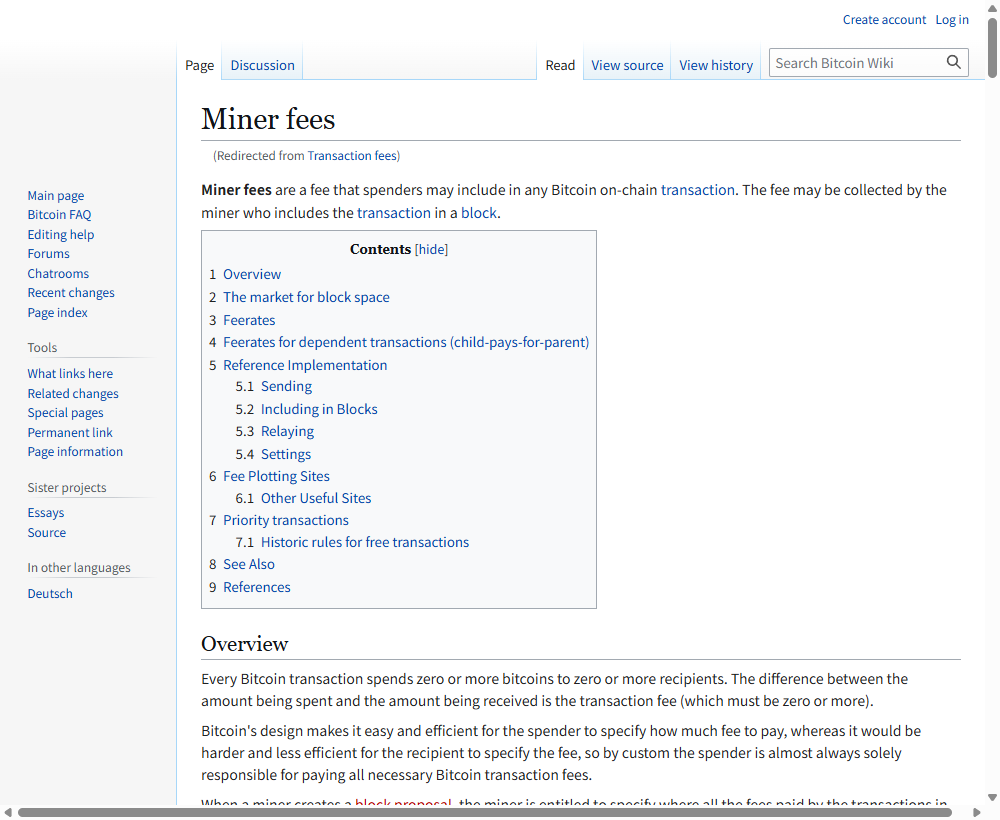
Update note (7 Sep 2026): added a reference image on how on-chain fees are actually set, since the fee-follows-amount assumption is behind most of the confusion here.